เลือกแชมพูและครีมนวดผม แชมพูและครีมนวดผมสมุนไพร ที่เหมาะกับสภาพผมต่างๆ ฟื้นฟูสภาพผมแห้งเสียให้ดูมีชีวิตชีวา ✓ส่งฟรี ✓เก็บเงินปลายทาง - มีให้เลือกมากมาย

฿885.00
กรุงเทพมหานคร


฿255.00
กรุงเทพมหานคร

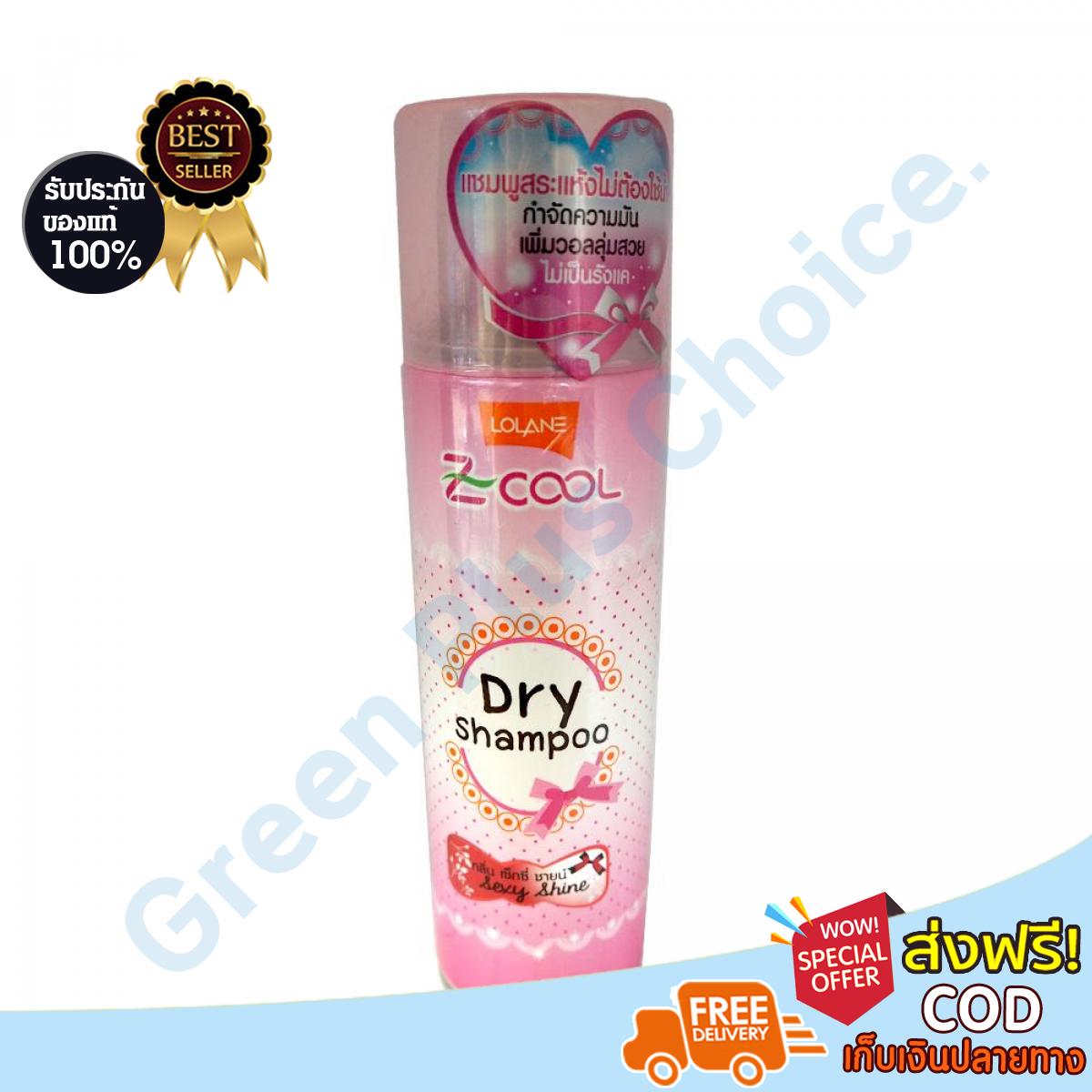
฿255.00
กรุงเทพมหานคร

เลือกแชมพูและครีมนวดผม แชมพูและครีมนวดผมสมุนไพร ที่เหมาะกับสภาพผมต่างๆ ฟื้นฟูสภาพผมแห้งเสียให้ดูมีชีวิตชีวา ✓ส่งฟรี ✓เก็บเงินปลายทาง - มีให้เลือกมากมาย
อายไลเนอร์กันน้ำ ถูกและดีที่สาวๆ ห้ามพลาด มีหลากหลายรูปแบบให้เลือกสำหรับผู้เริ่มหัดกรีดอายไลเนอร์ หรือมืออาชีพ เพื่อลุคดวงตาโฉบเฉี่ยว อายไลเนอร์ กันน้ำ ยอดฮิตขายดี ที่สามารถซื้อออนไลน์ได้ ฉบับล่าสุดปี
It's illegal to use someone else's copyrighted work without their permission, but a copyright registration doesn't last forever. In fact, a copyright lasts only a certain number of years past the author's death; when the registration ceases to be valid, the work enters the public domain and is freely available for use by anyone who chooses to use it. So how do you determine whether a work's copyright registration has run out -- our whether that work was ever registered in the first place? These questions seem straightforward, but the answers are more complex than you might think.
Unfortunately, if you'd like to use a particular work but you're not sure where to start, it's your own responsibility to determine whether it's protected by a copyright or in the public domain. A work might be in the public domain for any number of reasons; in order to figure out if you're free to use a work, there are a few questions you should ask yourself.
Is it an original work, or an idea?
Not everything is able to be copyrighted. Only "original works" that have been "fixed in a tangible medium" are able to be copyrighted -- the underlying idea is not. In addition, blank forms and other documents that contain no original work cannot be protected: ledgers, weight charts, address books, score cards, and other similar works are ineligible for copyright protection. Standard calendars are also ineligible -- however, while the calendar aspect cannot be protected, any artwork or photography that accompanies the calendar could be protected as a work of visual art.
Here are a few examples of things that cannot be copyrighted and, therefore, can be freely used:
* Someone writes a fictional children's book about dinosaurs, and they copyright the text. You want to write your own book about dinosaurs. Understand that it's the text alone that is protected from infringement, not the idea of fictional dinosaur friends going on journeys and doing other activities similar to the first dinosaur book. (Here's a great example of this point -- a frequent request my company's copyright division receives is to submit a few-page synopsis of a novel for copyright protection. We're careful to explain that while we could certainly send in those few pages of text for protection, our customers must understand that it's the actual text of the synopsis that would be protected, and not the book idea itself -- likely not what they had in mind!)
* Here's another example, this one from a court case by the name of Dunlap v. G&L Holding Group, Inc. (heard in the U.S. Court of Appeals for the Eleventh Circuit on August 27th, 2004). In this case, a gentleman came up with an idea for a bank that caters to gay and lesbian clientele. G&L Bank was formed and Dunlap became an employee. However, shortly after G&L's inception, Dunlap was fired and subsequently sued for theft of his idea. However, the suit was dismissed -- an "idea" cannot be protected, so someone who "steals" that idea has not broken any copyright laws.
Has the work been registered with the US Copyright Office?
With more recent works, the best place to start is the USCO's Copyright Records Search. Simply search the online database for the work you're looking for.
Of course, it isn't that simple. If the work isn't found there, that doesn't mean you've eliminated the possibility that the work is registered. It just means you have to dig a little harder. You may need to enlist the USCO's help in locating the registration. This process has its costs (5 for even an estimate of the cost!) -- but guess what's even costlier? Being sued for copyright infringement.
In what year was the work registered for copyright protection?
In some cases, you might know that the work was copyrighted at one point but be unsure whether that registration is still valid and effective. There are many factors involved (the year of registration, whether or not the copyright symbol needed to be affixed to works registered in that particular year, and so on), but there are a few general rules:
*If the work was published before 1923, the copyright has expired. It is now in the public domain and free to use.
*If a work was published between 1923 and 1963 and the copyright registration was not renewed, the work is free to use.
* The registration of a work created after January 1, 1978, will remain effective until 70 years after the author's death (or the death of the last author, if there were more than one authors). If the work was anonymous, registration remains effective for 120 years from the registration date.
* If the work was published before 1978, and the copyright symbol and notice were not included in the work, it's in the public domain (and always has been).
* If the work was published between 1978 and March 1, 1989, it's a little trickier -- if the copyright notice was not included in the work at the time of publication, the author had five years to do so. If they did not, the work is in the public domain.
Public Domain and Copyright Protection Check For The New Release in Health, Fitness & Dieting Category of Books NOW! Check What Are The Top Cooking Books in Last 90 Days Best Cheap Deal!
Check For Cookbooks Best Sellers 2012 Discount OFFER!
Check for Top 100 Most Popular Books People Are Buying Daily Price Update!
Check For 100 New Release & BestSeller Books For Your Collection
Check What Are The Top Cooking Books in Last 90 Days Best Cheap Deal!
Check For Cookbooks Best Sellers 2012 Discount OFFER!
Check for Top 100 Most Popular Books People Are Buying Daily Price Update!
Check For 100 New Release & BestSeller Books For Your Collection
Sarah Kolb, http://www.clickandcopyright.com
Since 2000, Click Industries, Ltd. has been helping thousands of small business owners, independent entrepreneurs, writers, and musicians start new business ventures, protect their intellectual property, and find new ways to market and promote their businesses and creative works. The management team of Click Industries brings a wealth of experience from the fields of government, law, IT development, and book publishing.
watches cell phone Order Tablespoon Waldorf 7 Micron Silverplated Set Of Order Emf And Anti Aging Bracelet E Q
Legislation
The Indian law of copyrigts is enshrined in the Copyright Act, 1957. The Act seeks to provide for the registration of copyrights in India. The object of copyright law is to encourage authors, artists and composers to create original works by rewarding them with exclusive right for a fixed period to reproduce the works for commercial exploitation.
What is Copyright
COPYRIGHT is a right given by the law to creators of literary, dramatic, musical and artistic works and producers of cinematograph films and sound recordings. In fact, it is a bundle of rights including, inter alia, rights of reproduction, communication to the public, adaptation and translation of the work. There could be slight variations in the composition of the rights depending on the work.
Copyright is the legal protection given to the creator of an original literary or artistic work. It is the exclusive right granted by the law to creator of such original work, to do, authorize, or prohibit certain acts in relation to such work, thereby protecting and rewarding creativity.
Copyrights subsist in following class of works:
a) Original literary, musical, dramatic and artistic works.
b) Cinematograph films
c) Sound recordings
The rights vary according to the class of work. Copyright also subsists in translations, abridgements or compilations of such works, provided the permission of the Copyright holder is obtained. Computer programmes are considered as literary works and are protected under the Copyright Act. There is no copyright in an idea.
Rights conferred by registration
In general, registration is voluntary. Copyright exists from the moment the work is created. Under Indian law, registration is not required either for acquiring copyright or for enforcing it in an infringement action. However, registration has evidentiary value in a court of law with reference to dispute relating to ownership of copyright.
Author of copyright
Under the copyright law, the creator of the original expression in a work is its author. The author is also the owner of copyright, unless there is a written agreement by which the author assigns the copyright to another person or entity, such as a publisher. In cases of works made for hire, the provider of the work is considered to be the author.
Filing and Prosecuting Copyright Applications
An application for copyright on Form-IV accompanied by four copies of the work is to be made on Form IV ( Including Statement of Particulars and Statement of Further Particulars) along with the prescribed fee at Copyright Office of the Department of Education, New Delhi. The Copyright Office initially provides a filing number and filing date and issues a filing receipt. Thereafter the application is formally examined by the Office. Defects will be communicated to the applicant. Once the application is found to be in order it is accepted and the Copyright Office issues the registration certificate.
Duration of registration
The duration granted for works of copyright varies depending on the type of work. Literary or musical works or artistic works, other than photographs, have a life span, which extends for the life of the author and 60 years from the end of the year in which the author dies. However, if the work has not been published, performed, or offered for sale or broadcast during the life of the author, the copyright protection shall continue for a period of 60 years from the end of the year in which any of these acts are done relating to the work.
Cinematograph films, photographs and computer programs are protected for 60 years from the end of the year in which the work is made available to the public with the consent of the owner of the copyright or published, or, failing such an event, for 60 years from the end of the year in which the work is made. Sound recordings are protected for 60 years from the end of the year in which the recording is first published.
In the case of anonymous or pseudonymous works, the copyright is for 60 years from the end of the year in which the work is made available to the public with the consent of the owner of the copyright or from the end of the year in which it is reasonable to presume that the author died, which ever term is shorter.
Use of the "©" symbol
Anyone who claims copyrights in a work can use copyright notice to alert the public of the claim. It is not necessary to have a registration to use the designations though it is highly advisable to incorporate a copyright notice like the symbol, etter "c" in a circle or the word "Copyright" followed by name of copyright owner and year of first publication. For example, © ipfirmsdirectory 1999.
Remedies For Infringement
It is the sole responsibility of the owner to see that his copyright is not being infringed upon by someone else. It is the owner's duty to file a suit of infringement against the infringer. The reliefs which may be usually awarded in such a suit are -
i. Injunctons whether interim or final.
ii. Damages.
Criminal action also can be taken on the basis of copyright registration. The minimum punishment for infringement of copyright is imprisonment for six months with the minimum fine of Rs. 50,000/-. In the case of a second and subsequent conviction the minimum punishment is imprisonment for one year and fine of Rs. one lakh.
International copyright protection
India is a member of both Berne and Universal Conventions and Indian law extends protection to all copyrighted works originating from any of the convention countries. Foreign works first published in a country which is a member of either of the Conventions would be accorded the same copyright protection in India as Indian works without undergoing any formalities, on the assumption that the home country accords reciprocity to Indian works.
Copyright in India: Law & Procedure Check For The New Release in Health, Fitness & Dieting Category of Books NOW!
Check What Are The Top Cooking Books in Last 90 Days Best Cheap Deal!
Check For Cookbooks Best Sellers 2012 Discount OFFER!
Check for Top 100 Most Popular Books People Are Buying Daily Price Update!
Check For 100 New Release & BestSeller Books For Your Collection
P.M.George Kutty, Attorney at Law of http://www.pmgip.com
cell phone watches Sale Jackson 3018159 Pack And Pop 28 Safety
It doesn't matter what stage of life you are in, everyone has the same basic needs. These needs are physical, emotional, social, intellectual, spiritual, and creative. When all of these needs are satisfied, you'll discover that your life is brimming with joy and good feelings. You'll find your self-esteem at its highest peak whenever you are fulfilled within your daily life and activities.
Physical Needs: These needs are the basics. The need for air, water, sleep, exercise, and sex.
Emotional Needs: This is the need for praise, love, trust, security, feeling OK inside, and self-fulfilled.
Social Needs: This is the need for companionship and friendship. This is usually gained from a peer group.
Intellectual Needs: This is the need for challenging thoughts, reading, learning something new, and mind stimulation.
Spiritual Needs: This is the quiet need inside that wants to know and believe in a higher spiritual power than ourselves. This need increases our awareness and sensitivity to the greater aspects of life.
Creative Needs: This is the need to express yourself in any manner you desire. This can include the arts, dancing, acting, and writing - almost anything that allows you to feel imaginative and inspired.
All of the above needs are usually a part of every human's life. All of us want to have these needs met in life. Having these needs met increases our enjoyment of living and creates a healthy body and soul. So how do parents fulfill these needs in their growing children? The first way is to become aware that the needs of a child are the same as yours. Being empathetic to your child at all times creates a bond that nurtures the needs of your child. For example, whenever your child wants to create or make something, allow your attention to center on your child and give him whatever you think will help to inspire your child's creativity.
My children loved to create drawings on large pieces of paper. I helped them do this by supplying them with the all the paper, crayons, paint, brushes, etc. necessary to stimulate their minds. Then I let them go to it! It was exciting to watch my child create a masterpiece of their imagination. Their artwork was sweet, beautiful and full of ingenuity. I then posted the artwork all around the house to show to their siblings and guests. As a parent, it was my goal to communicate with my child that I truly understood and valued his desires and feelings to be creative. I empowered my child to become all that he can be at that moment. This process immediately shows your child that his opinions and thoughts are valued.
By empowering your child, you are allowing your child to take ownership of their feelings, take responsibility for their behavior, make decisions that help them grow, follow through with commitments and most importantly, to become aware of the needs and feelings of others. You are giving your child the chance to experience success and understand his own uniqueness. It's rewarding for a child, adolescent and adult to have recognition and respect. By empowering yourself, as well as your child, you are fostering basic needs that truly make you glow inside and out.
At different times in our lives, we are capable of doing certain things. Stay tuned to where your child's capabilities are during his childhood and supply the above needs according to his stage in life. In fact, developmental stages continue right into old age. When a child's needs are met, his discomforts and fears are quickly removed and he finds that his life is truly a safe and fun place to be. This feeling leads to a child that learns to trust his environment and each successive stage of development.
Know that meeting these six needs in your child's life is not hard to do at any stage. Getting involved in your child's exploration of his life doesn't take money, but it does take thoughtfulness and time. Providing these needs throughout your child's lifetime allows your child to go through his stages of life with a healthy regard for himself and for society. It encourages your child's autonomy and capacity to do more with is his lifetime. Who can ask for more?
Copyright © 2006 by Linda Milo and Empowering Parents Now. All rights reserved.
Six Basic Needs of Children, Adolescents and Adults Check For The New Release in Health, Fitness & Dieting Category of Books NOW!
Check What Are The Top Cooking Books in Last 90 Days Best Cheap Deal!
Check For Cookbooks Best Sellers 2012 Discount OFFER!
Check for Top 100 Most Popular Books People Are Buying Daily Price Update!
Check For 100 New Release & BestSeller Books For Your Collection
Linda Milo, The Parent-Child Connection Coach, specializes in helping mothers and fathers turn their parenting challenges into a more livable, more workable, and more enjoyable family life. Her FREE better parenting newsletter covers specific, proven, and immediately usable methods for overcoming the most common parenting challenges. Visit http://www.empoweringparentsnow.com to subscribe to her FREE newsletter, and you’ll also receive her FREE Special Report.
watches mobile phone Discount Crl Brushed Stainless 2 X 3 1